




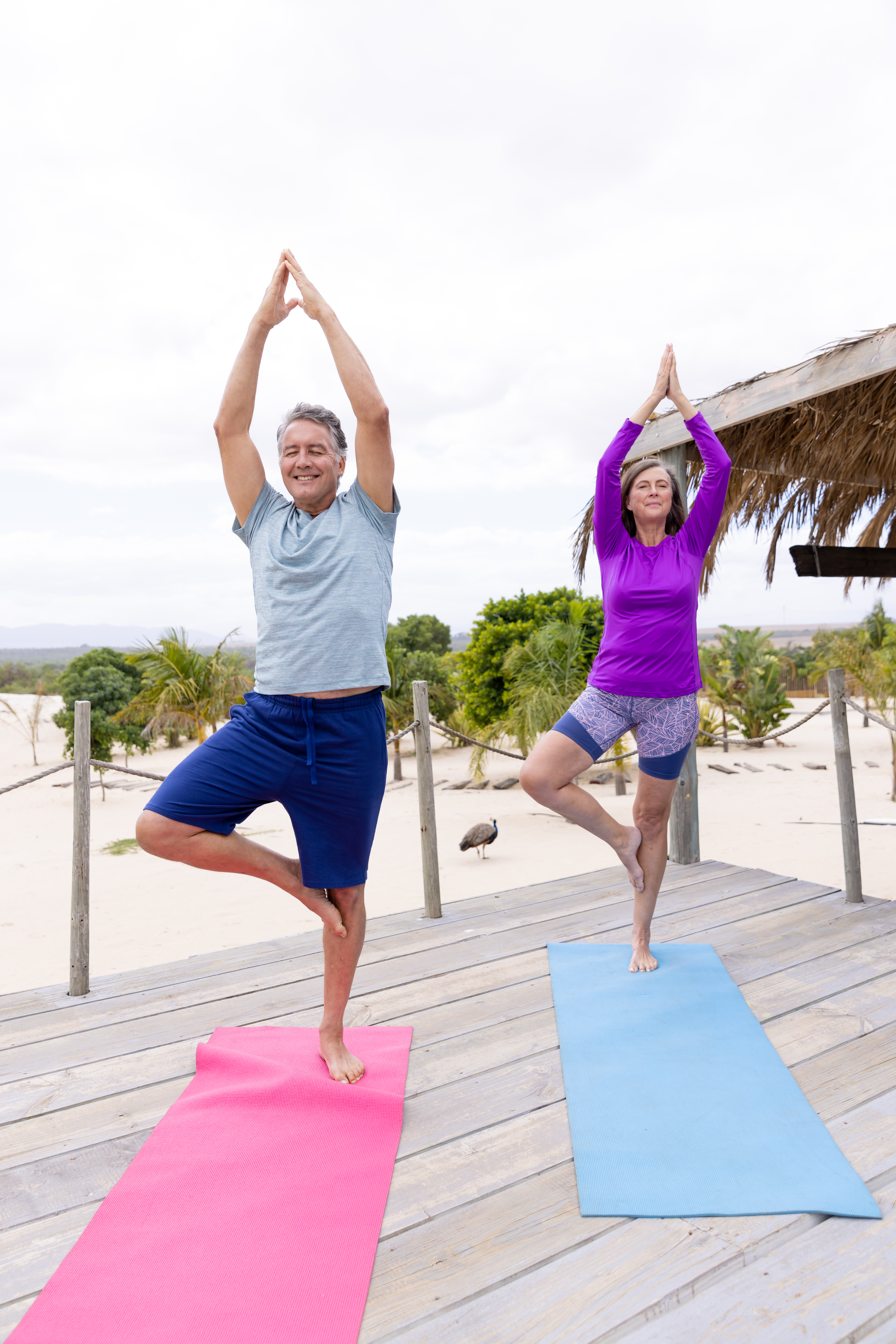
Stay steady on your feet and in the game. Learn how improving balance can keep you active and injury-free
I never really gave it much thought. I have always been pretty active, played a wide range of sports, and well have generally been able to remain upright without to much effort. So balance, was never really an issue. I ski, I used to roller blade. I’m not a bad dancer, all of which required balance. Never managed to surf, or wind surf though. When it came to balance in the sea, well, that was always a challenge. But on dry land, I was fine.
Recently though, I do find myself, almost stumbling or simply losing balance for no apparent reason. Not all the time, every now and again, doing the simplest of things, like getting dressed in the morning, can involve an inexplicable lurch to the side, as I lose my balance. So recently I have been giving the issue more thought, where I have the feeling that I am going to have to work to improve my balance to avoid a nasty accident, but perhaps more important, to avoid the embarrassment of falling over for no reason. I thought it would be a good idea to look into the matter. Here’s what I found.
Balance has always been one of these things we take for granted. That is until we suddenly find ourselves wobbling, even to the tiniest extent, for no apparent reason. Maintaining good balance isn’t just about avoiding embarrassing stumbles, and near misses; it plays a critical role in preventing sports, or even every day injuries, especially after 50. Whether you’re still hitting the tennis courts, cycling, skiing, or whatever, balance is key when it comes to staying active and injury-free.
Why Balance Matters More After 50
As you pass the half-century mark, your body starts to experience changes that can affect balance. Muscle mass decreases, reflexes slow down, and joint flexibility diminishes, making it easier to lose your footing or misjudge a movement. Without proper balance, a simple workout, or even the simplest chores around the house can become a minefield of potential injuries.
According to the Centers for Disease Control and Prevention, more than 25% older adults take a tumble each year, and about 20% these falls lead to serious injuries such as broken bones. Not pleasant…
The Connection Between Balance and Sports Injuries
Balance is about more than the ability to stand still on one leg, although that’s a good start. In sports, balance involves the ability to control your body’s position during dynamic movements. Whether you’re pivoting on the tennis court, transitioning from a run to a jump, or simply walking on uneven ground, good balance helps you maintain control, reducing the risk of sprains, strains, and even more severe injuries like fractures.
A study published in Sports Medicine found that athletes over 50 who incorporated balance training into their routines reduced their risk of injury by nearly 40%.
Key Exercises to Improve Balance
Improving your balance doesn’t require a drastic change in your workout routine. Simple exercises can make a big difference. Here are a few to get you started:
- Single-Leg Stands: Stand on one leg for 30 seconds, then switch to the other leg. As you progress, try closing your eyes or standing on a soft surface to increase the challenge.
- Heel-to-Toe Walk: Walk in a straight line, placing the heel of one foot directly in front of the toes of the other. This exercise helps to improve stability and coordination. Police have been known to se this exercise to check for drunk driving.
- Tai Chi: This ancient Chinese practice is renowned for its benefits in improving balance and coordination. The slow, controlled movements are perfect for enhancing balance while also providing a gentle workout.
- Yoga: Many yoga poses focus on balance and core strength, which are essential for maintaining stability during everyday activities and sports.
Pro Tip: Start with a few minutes of balance exercises each day and gradually increase the duration as your stability improves.
The Benefits of Balance Beyond Injury Prevention
While preventing injuries is a significant benefit, improving balance can also enhance your overall quality of life. Good balance helps with posture, coordination, and confidence in your movements. It can also improve your performance in various sports by giving you better control and agility.
Incorporating Balance Training into Your Routine
Adding balance exercises to your daily routine doesn’t have to be time-consuming. Here’s how you can do it:
- Warm-Up: Start your workout with a few minutes of balance exercises to prepare your body for more intense activity.
- Cool Down: Finish your workout with balance exercises to help reduce the risk of post-exercise dizziness and improve overall stability.
- Daily Practice: Incorporate balance exercises into your daily life. For example, try balancing on one leg while brushing your teeth or waiting for the kettle to boil.
Statistic: According to NIH, “several studies have concluded that strength, balance, and aerobic-based training is effective in reducing falls among older adults in general and up to 50% in community-dwelling older adults specifically.”
Common Myths About Balance Training
Let’s clear up a few misconceptions about balance training:
- Myth: “Balance exercises are only for older adults.”
Truth: Balance is crucial at any age, especially if you’re active in sports. Starting balance training earlier gives you a more stable platform and can help maintain it as you age. - Myth: “If I’m already strong, I don’t need balance training.”
Truth: Strength and balance are related but not the same. Even if you have strong muscles, poor balance can still lead to injuries. - Myth: “Balance exercises are too easy to be effective.”
Truth: While balance exercises might seem simple, they are highly effective in improving stability and preventing injuries.
Conclusion: Balance Is Key to Staying Active and Injury-Free
When you pass the age of 50, maintaining good balance is essential for preventing injuries and staying active in the sports and activities you love. Incorporate balance exercises into your routine and you can enhance your stability, improve your performance, and reduce your risk of injury. Whether you’re an avid golfer, still on your skateboard, a weekend warrior, or just someone who wants to move confidently through life, balance training is your ticket to longevity, a whole lot more fun, and overall well-being.
What’s your favorite balance exercise? Share your stories and any tips and tricks you’ve picked up long the way.
Subscribe to Three Score for more on staying active and injury free while living your best life after 50.


