




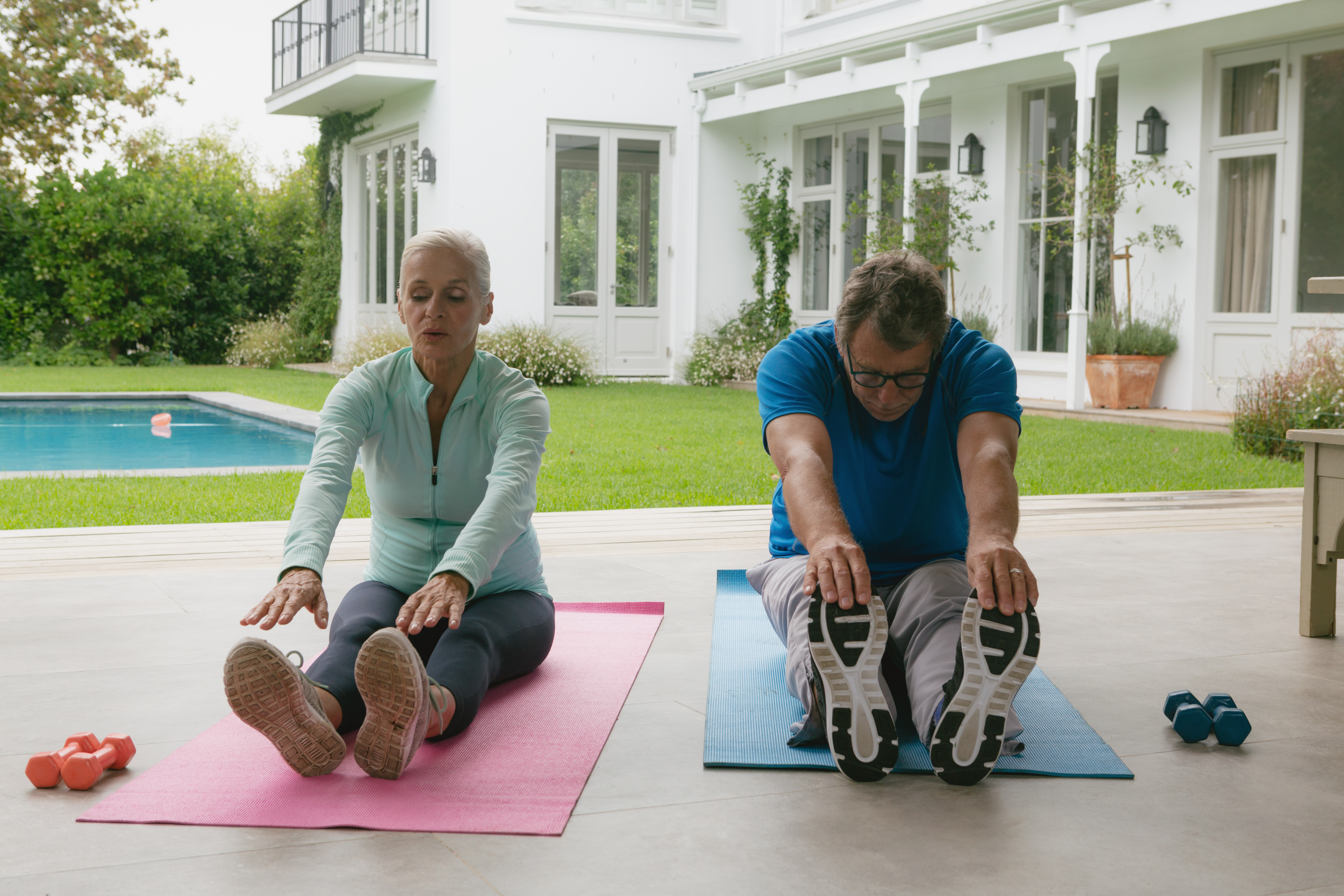
Staying limber after 50 isn’t just for yoga buffs: Discover how a little stretch can go a long way to help dodge avoidable injuries.
Can you touch your toes? I can. or to be more accurate, if I keep up my stretches then I can. If i neglect them for even a few days, it becomes more of an issue. Recently I began powerwalking, so every two days I go for a walk and stretch afterwards, so yes, I can touch my toes.
I wouldn’t go as far as saying I am flexible, but I am doing more stretching. I also have a couple of slipped discs in my lower back which sometimes leads to terrible sciatica down my leg. The only thing that fixes it, or prevents it is stretching. It works, and by stretching, I manage to maintain my mobility. I can exercise> And I am relived to say that despite, back, shoulder and knee issues, I remain pretty much pain free.
I have tried yoga, but find that I don’t really have the patience, although I am determined to find it somehow, as I reckon the older I get, the more important it is to be supple and flexible. The best way to do I’m told, is yoga. Indeed stretching is probably more important than the exercise itself, if I want to avoid injuries. So its worth exploring.
As we age, our bodies naturally become less flexible, which ultimately leads to a higher risk of injuries. While it might be tempting to skip those stretching exercises, as I am prone to do, maintaining and improving flexibility is crucial, especially as we pass the 50 mark. Flexibility not only helps prevent injuries. It also contributes to our overall mobility and consequently, quality of life. So, why is flexibility so important and how you can incorporate it into your daily routine keeping yourself injury-free and active.
Why Flexibility Matters After 50
Flexibility refers to the range of motion available at your joints, and it’s an essential component of physical fitness. As we age, the elasticity of our muscles, tendons, and ligaments decreases, making us more prone to stiffness and injury. This reduction in flexibility can lead to, what my nephew call “old man noises”, usually caused by…
- Limited Mobility: Stiff joints and tight muscles can make everyday activities like bending down, reaching for objects, sitting down and standing up, or even just walking, more challenging.
- Increased Risk of Falls: Poor flexibility can affect your balance and coordination, increasing the likelihood of falls, which are a major cause of injury in older adults.
- Higher Likelihood of Muscle Strains and Sprains: Tight muscles are more susceptible to strains, while limited joint flexibility can lead to sprains during physical activities.
Statistic: According to Harvard Health, “regular stretching keeps muscles long, lean, and flexible, and this means that exertion won’t put too much force on the muscle itself“.
The Benefits of Flexibility Exercises
Incorporating stretching and flexibility exercises into your routine offers several benefits that go beyond just injury prevention:
- Improved Posture: Flexibility exercises help to align the body properly, reducing the strain on muscles and joints and improving posture.
- Enhanced Balance and Coordination: Flexibility training improves balance by increasing the range of motion in your joints, which is crucial for preventing falls.
- Increased Blood Flow: Stretching increases blood flow to the muscles, helping to reduce muscle soreness and speed up recovery after exercise.
- Better Athletic Performance: For those who still enjoy sports or other physical activities, maintaining flexibility can enhance your performance and reduce the risk of injury.
Types of Flexibility Exercises
When it comes to improving flexibility, there are several types of exercises to consider. Each serves a unique purpose, and incorporating a variety into your routine will deliver the best results.
- Static Stretching: This involves holding a stretch in a comfortable position for 20-30 seconds. It’s best performed after your muscles are warm, such as after a workout or a warm bath.
- Dynamic Stretching: Unlike static stretching, dynamic stretching involves moving parts of your body through a full range of motion. This type of stretching is great for warming up before physical activity.
- Yoga and Pilates: Both yoga and Pilates emphasize flexibility and balance, making them ideal exercises for improving range of motion while also strengthening the muscles.
- Tai Chi: This ancient practice combines gentle movements with deep breathing, improving flexibility, balance, and mental focus.
According to WebMD, “At any level of yoga, you’ll probably start to notice benefits soon. In one study, people improved their flexibility by up to 35% after only 8 weeks of yoga“.
Incorporating Flexibility into Your Daily Routine
Building flexibility exercises and stretching into your daily routine doesn’t have to be time-consuming. Here are some practical tips to help you get started:
- Start Your Day with Stretching: Spend 5-10 minutes each morning doing gentle stretches to wake up your muscles and joints.
- Incorporate Stretch Breaks: If you’re sitting for long periods, take regular stretch breaks to keep your muscles from tightening up.
- Combine Flexibility with Strength Training: After your strength training sessions (if you indulge), incorporate static stretching to improve flexibility and reduce muscle soreness.
- Try a Class: Consider joining a yoga, Pilates, or Tai Chi class designed for older adults. You can find classes tailored to the needs of over the 50s, ensuring that the exercises are safe and effective. You may however prefer to join a regular class catering to all ages, which also fine. Just make sure to start slowly and build up.
Common Flexibility Myths Debunked
There are a lot of misconceptions about flexibility, especially as we age. Let’s clear up a few:
- Myth: “I’m too old to improve my flexibility.”
Truth: It’s never too late to start. Even if you haven’t stretched in years, regular flexibility exercises can improve your range of motion and reduce stiffness, in a relatively short space of time. - Myth: “Stretching before exercise is all I need.”
Truth: While dynamic stretching before exercise is beneficial, incorporating regular static stretching and flexibility exercises into your routine, especially at the end of a workout is key long-term and injury free improvement. - Myth: “Stretching is only for athletes.”
Truth: Flexibility is important for everyone, regardless of fitness level. It helps with run of the mill daily activities, reduces the risk of injury, and improves overall quality of life.
Conclusion
Maintaining and improving flexibility is really important as we age, particularly after 50. By incorporating stretching and flexibility exercises into your routine, you can reduce your risk of injury, improve your mobility, as well as your balance. You can continue to enjoy doing what you love to do. Whether it’s a morning stretch, a yoga class, or simply taking a few moments to move through your range of motion, every little bit helps.
So can you tough your toes. Have you found flexibility a challenge? Do you stretch? Maybe you have a favourite exercise or some tips and tricks you would like to share. We’d love to hear from you.
Subscribe to Three Score for more on flexibility, avoiding injury and general health & fitness in your 50s and 60s.


